domingo, 9 de marzo de 2008

Blogs y empresas, parte I: Conversación

¿Qué empresa/marca no debe tener -por ningún motivo- un weblog?

Por ningún motivo debe tener un weblog una empresa/marca que ofrece un producto/servicio malo, ajeno a la calidad y que, por ende, evita todo tipo de información capaz de encender una crisis comunicacional.

Esta empresa mediocre evitará la conversación, porque el diálogo probablemente se convertirá en una ensalada de críticas y alegatos de parte del cliente, que desviarán en monólogo.

Para nuestra suerte, empresas malas, de esta índole infernal, son muy pocas. Sin embargo, la gran mayoría -y más aún cuando se trata de empresas grandes- siempre corren riesgo de crisis comunicacionales. No hay empresa de la cual siempre se hable bien. Así, por ejemplo, como se escuchan maravillas de Disney o de Apple gracias a sus grandiosos departamentos de marketing, igual por aquí o por allá, ambas sufren críticas de parte de sus trabajadores o usuarios.

Pero ¿por qué temer a la conversación?

Hoy toda empresa está comunicacionalmente expuesta debido a que los usuarios tienen en su mano el poder de generar viralmente impresiones negativas respecto de experiencias trágicas relativas a un producto/servicio. Esto no tiene control.

Los clientes ya están conversando y compartiendo opiniones -querámoslo o no- respecto de su experiencia relacionada con nuestro producto/servicio.

Entonces la primera pregunta que cabe hacerse es ¿por qué no nos unimos a la conversación?

lunes, 3 de marzo de 2008

Advertising in Context: The Print Model

Advertising is all about context: Where will an ad be placed? What is the best way to access the most viewers? How will it capture viewers attention? Answering these questions is important to any advertise and marketing campaign. One should understand how their ad fits in media.

Lately, the advertising model is proving more complex. A great deal of this complexity concerns the newer media and maximizing it´s audience (for example, the mobile phone, see previous entry). The internet has always provided an interesting platform for advertising. Google has dominated the search engine with their industry leading system, while there are still corners where no functional model has yet to be realized (facebook, twitter, this blog, haha).

Yet, more complexity surfaces in the model itself. If you consider a general set advertising solutions: ad spaces in the exterior, commercials on TV and radio, and spaces in printed media, one could notice that these models all center around the context of the end product, or context of the media "vehicle" that brings these ads to the masses.

Now, some campaigns in the print model have diverted from just the end-product orientation noted above. The following is an example:

A typical pipe making company wishes to begin a marketing campaign to a national audience, which advertorial solution carries more weight?
  1. An independent advertisement in a national daily newspaper with a high circulation.
  2. An advertisement in a feature about the various sectors associated with piping (not only for water, but for oil, gas, etc). This report, when published, will be placed as a special advertising section within the same newspaper.
I believe the second option holds more inherent value. Though both solutions consider the context of the media vehicle (the national newspaper´s audience), the second solution further contextualizes the product itself, and articulates the role and position of the company within an informative feature, a Special Advertising Section.
''Special sections have always been around, but now they have gone on steroids,'' said Michael A. Clinton, executive vice president and chief marketing officer at Hearst Magazines. ''They have become much more complex and sophisticated.''

They are also less lucrative than regular advertising, leaving some in the industry wondering whether advertisers are being taught that an elaborate, custom editorial package is a better environment for their marketing messages than the magazine. (from David Carr´s article The Media Business: Advertising)
In printed media around the world, more of this is showing up everyday (see an example here). Leading media, such as the Financial Times and the International Herald Tribune, are developing their own "Special Reports" and picking upon the advertorial market.

Third party agencies are even getting into the picture, publishing their reports with The Economist, Forbes and Fortune, and they have some very strong business structures. Ad space is negotiated with the media, but because of the sheer volume of ad space that is negotiated, the prices are significantly discounted. Even with a nominal markup, these agencies end up charging their advertisers less for presence in a featured report than if they were to advertisement independently. Suddenly, people can gain exposure in the world´s leading media for less money. And with the right feature, these third party agencies may target any company. With such volume in business, what media wouldn´t want to work with them?

Though it isn´t without its pit-falls (obviously, it is a fine line between editorial and advertisement), it could be the best value in advertising today. One could call it a mini-revolution in the Advertising Print Model, perhaps it will serve the rest of the media world as an example, though the Internet and the Mobile Phone have a long way to catch up.

More...

domingo, 2 de marzo de 2008

A ordenar la casa

Más de un mes ha pasado y acá no se ha posteado nada. ¿Vacaciones? No, no estábamos de vacaciones...

¡Sólo buscando ideas! Hay tantos blogs y websites excelentes en la red que de repente no hace falta repetir y repetir lo que otros ya están diciendo. Por esto es que a veces pierde sentido postear en el blog si rápidamente ya se puede "comunicar" a través del micro o nano blogging (pueden seguir lo que leo y hago a través de Twitter).

Además aclarar que el fin de este blog es esencialmente académico y que con él buscamos mantenernos al día en la discusión de la evolución y la nueva forma de comunicar que causa Internet y las nuevas tecnologías.

¡Hay tantas cosas de las que hablar y de las cuales -acá al menos- aún no se ha hablado! Por ahora creo que empezaré tratando un tema que para unos es obvio y para otros es una nube: la relación entre blogs (o nueva comunicación) y empresas.

Vuelvo a ordenar la casa y espero que esto se ponga más entretenido y quizás sin sentido (como los silbidos de Andrew Bird en La misteriosa producción de huevos).

lunes, 28 de enero de 2008

Trabajadores, empresarios y confianza


Hoy veía este video en Social Media Today que se cuestiona la relación trabajador - empresario y trata de crear conciencia en el management para que la dirección de las empresa gane con autoridad la confianza de sus empleados, ya que ello se traduce en un círculo virtuoso: causa empleados contentos, mejor producto/servicio y por ende, clientes y stakeholders felices.

El video me trajo a la memoria las clases de Jesús Zorrilla (Harry Jones, Capitán de Mar y Guerra, etcétera, etcétera) y entonces ahora agarro mi libro de Juan Antonio Pérez, Fundamentos de la Dirección de Empresas y algo cuento sobre la organización de las empresas...

Toda empresa se compone por personas. Es una organización, por decirlo de alguna forma por esencia antropológica y accidentalmente técnica que busca un objetivo: producir (y bien, para que sea rentable).

Así se distinguen tres tipos de organizaciones empresariales: técnicas o mecanicistas, orgánicas o psicosociológicos y antropológicas o institucionales.

En un sistema técnico o mecanicista la organización se contempla como una simple coordinación de acciones humanas cuya finalidad es la de producir y distribuir una serie de objetos y/o servicios. Así, la organización aparece como una máquina, más o menos complicada, que produce algo y consume algo. En este sistema no hay más valor que el que se mide por la relación entre lo producido y lo consumido.

En tanto el modelo psicosociológico reconoce que fuera de la empresa, los empleados también tienen motivaciones. Así pues, cualquier acción humana en el seno de una organización tiene una doble evaluación: esa acción puede ser más o menos adecuada para el logro de los objetivos de la organización y, al mismo tiempo, más o menos adecuada para el logro de los objetivos de la propia persona que actúa.

La diferencia radical con el modelo mecanicista no está en el hecho de que, dentro de éste, no se contemplan los objetivos personales -que sí que se tienen en cuenta-, sino en que se supone implícitamente que una adecuada definición de los objetivos de la organización puede llevar a incluir los objetivos personales.

Y por último, el modelo antropológico contempla la empresa como una institución, es decir, como una realidad humana cuyo sentido último es la organización de las capacidades de las personas para satisfacer necesidades de esas mismas personas.

La institución busca de un modo explícito la satisfacción de motivaciones actuales, pero de tal modo que esa satisfacción no sea perjudicial y, en la medida de lo posible, resulte beneficiosa para todo el conjunto de necesidades de la persona. Se propone como finalidad no solamente la propia de un organismo, sino también de dar un sentido a toda la acción humana que coordina. Busca trascender.

Conclusión: Sobran los mecanicistas. Los orgánicos son la moda. Y qué pocas instituciones REALMENTE hay.

jueves, 17 de enero de 2008

The Five Forces Revisited

The original article by Michael Porter in 1979, How Competitive Forces Shape Strategy, established ground-breaking parameters in business theory, strategy and competition analysis. An updated article released in January 2008 now follows it up.

"Awareness of the five forces can help a company understand the structure of its industry and stake out a position that is more profitable and less vulnerable to attack." (An excerpt from the article, find the full text here).

Much has changed since 1979, and concerns about the structures application to the standard business model have surfaced, especially with the advent of the Internet.

Porter, in this video interview, attests that The Five Forces have stood the test of time, and still insists that "the underlying drivers of profitability [in any sector] are the same". In the article, he further elaborates his original idea, now offering more guidelines and examples based in much of the experience gained since 1979.

More...

domingo, 6 de enero de 2008

An Easy Thing to Visualize

Lately, I've been getting more into taking HDR pictures because it simply allows you to take pictures that more "accurately represent the wide range of intensity levels found in real scenes ranging from direct sunlight to shadows."

Essentially, this is doing something that would be impossible with a normal camera, and is another step towards the real thing (like HD content in general).

For me though, it is an easy way to see what technology can potentially do, and in this case - more accurately depict the view I had of a beautiful canal in Annecy, France.

I am a visual learner. Geometry comes easier for me than Algebra. As it was for me, it is for many people: it is easier to show them picture than to explain something. And often, this is case with the tech industry.

Many of my co-workers and friends spend a great deal of time getting information off the internet, some of them have realized the benefit of RSS feeds (ironically standing for Really Simple Syndication), and it might be safe to say that if they understood the idea of it and the benefit of employing it, they might jump on board netvibes as well.

But why aren't these people there? It could be that they have visualized it, and don't see the benefit (like with Twitter?) and it could be that people just like the presentation of information more than the consolidation of it. After all, people still love their newspapers in the morning. Really, it all comes down to incentives (again).

Will my friends and family benefit more from seeing such an HDR image? I like to think so, though there is no guarantee. But it is out there, the before and after, perfectly contrasted in theory and color, ready for their judgment. And most will probably not even notice the difference (though many will because HDR images can easily be taken too far).

More...

jueves, 3 de enero de 2008

La batalla del cómo

El fin de un año culmina un ciclo y comienza otro. Ese es el hecho que todos celebramos. Esperamos iniciar bien y con alegría la etapa que comienza en nuestras vidas. Feliz 2008 para todos.

Los años pasan e Internet crece. Se abren y se cierran ciclos. Más vigente que nunca está el constante cuestionamiento a la reacción que tienen los medios tradicionales a la revolución mediática que está ocurriendo.

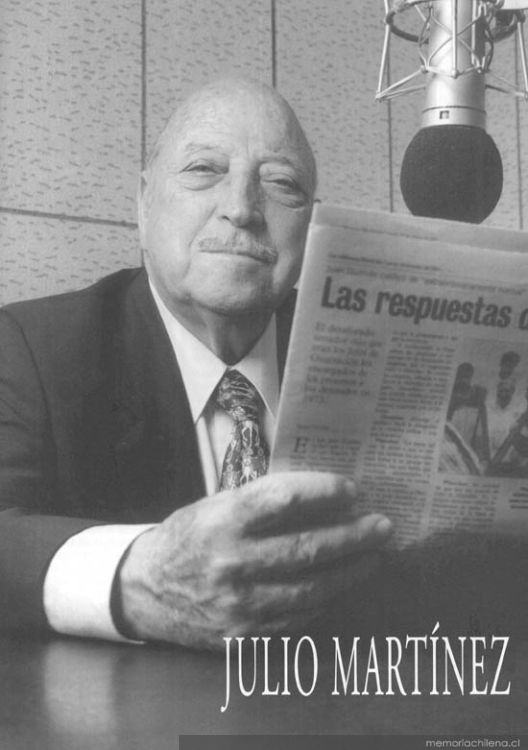
En tanto, en Chile murió un gran comunicador: Julio Martínez (foto de Memoria Chilena). Con él toda una historia de periodismo. JM fue un grande porque sus palabras eran sinceras, hablaba con el alma, y detrás de él siempre había verdad.

El tiempo pasa y los medios cambian. Las formas cambian, pero el fondo sigue y seguirá siendo siempre el mismo: la verdad. Por esto el legado de JM trascenderá y será recordado hoy y siempre. Todo un ejemplo.

Entonces la "batalla del cómo" comunicar continúa. Papel vs. digital. ¿Qué conviene? ¿Cuándo cambiar? Seguro que JM concordaría con la opinión del editor del New York Times, Arthur Ochs Sulzberger Jr, quien dice la pura y santa verdad:

"El papel es, fundamentalmente, un sistema de distribución. Ni más ni menos. Lo nuestro es obtener información y editar el mejor noticiario que podemos crear. Soy agnóstico en lo que se refiere a su distribución. En este momento muchos de los nuestros, la mayor parte de nuestro pueblo, quiere que se lo den en papel y nosotros trataremos de servir a ese mercado. Cuando le quieran en Internet ahí estaremos para servirles. Si quieren que se les transmita directamente a sus mentes, crearemos una edición cerebral del New York Times”. (Párrafo extraído de una presentación tomada del blog de Eduardo Arriagada).

Punto.